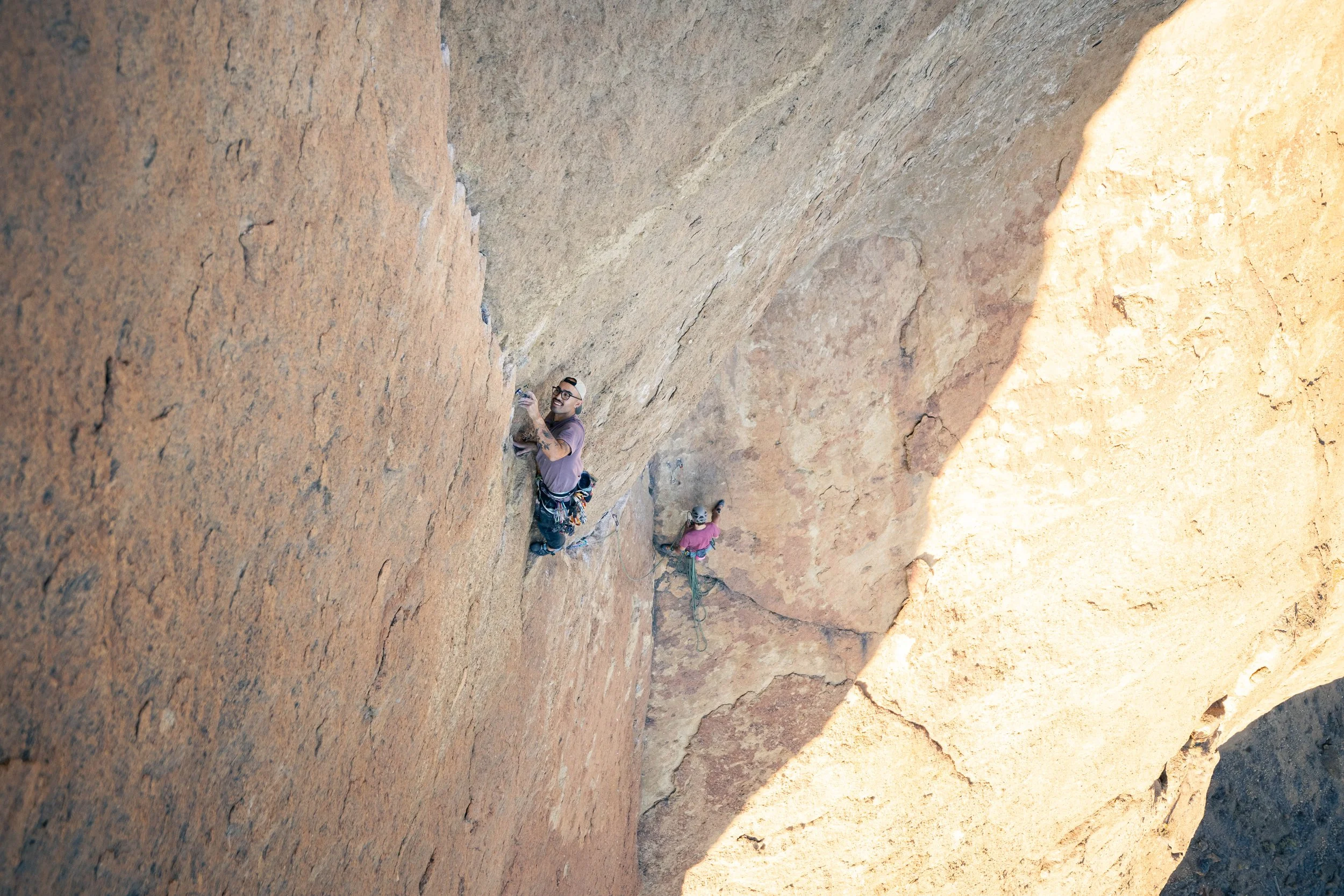
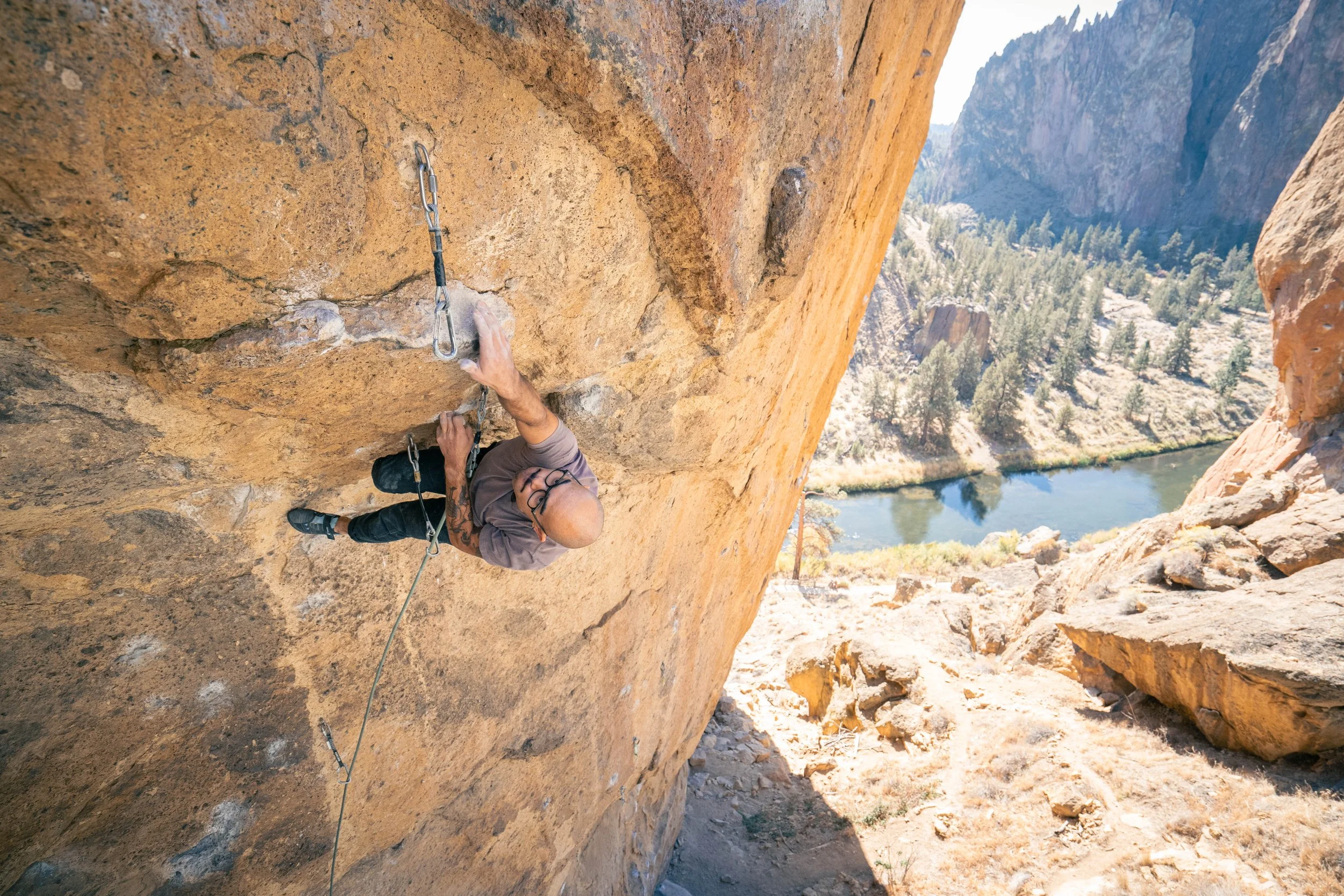
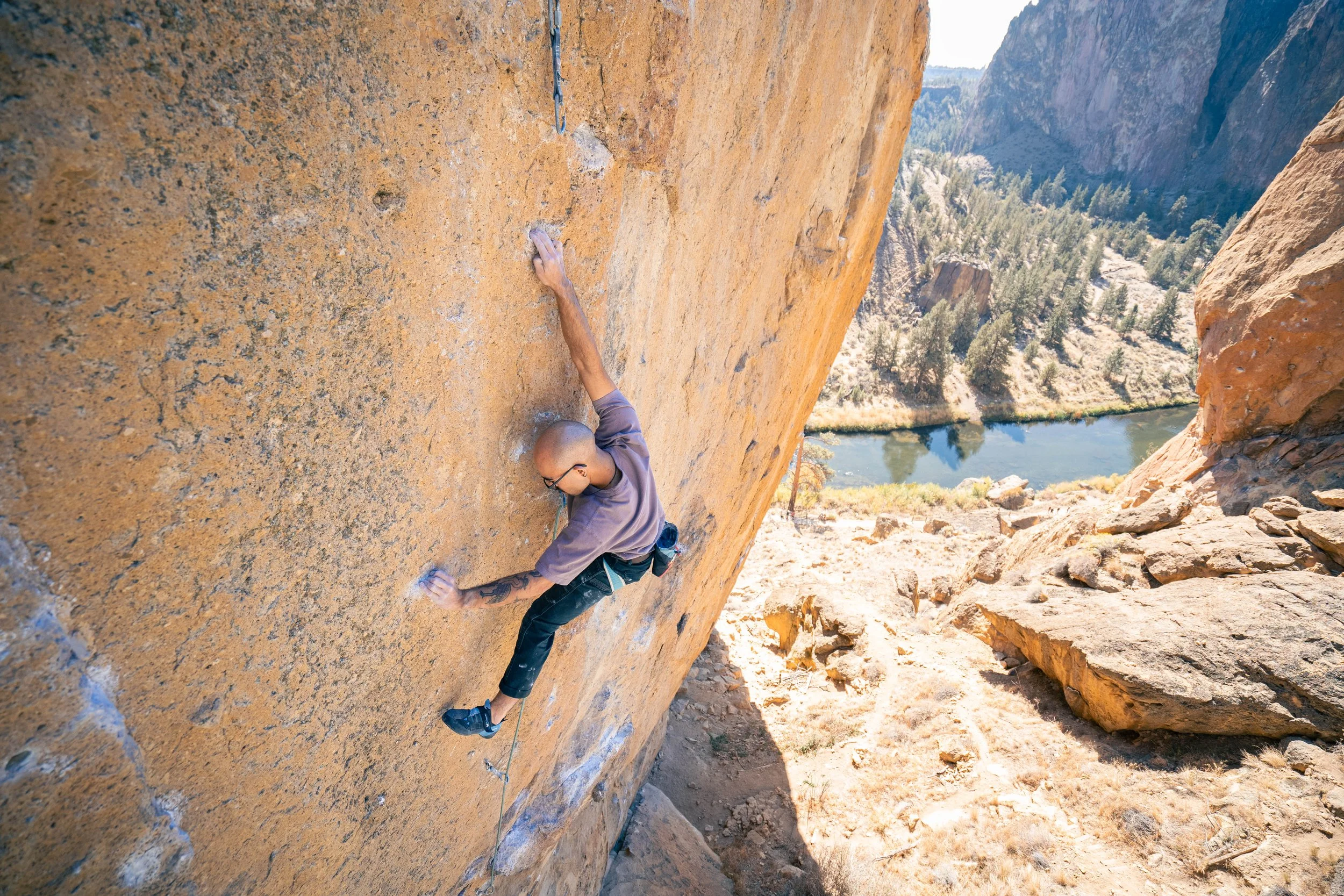
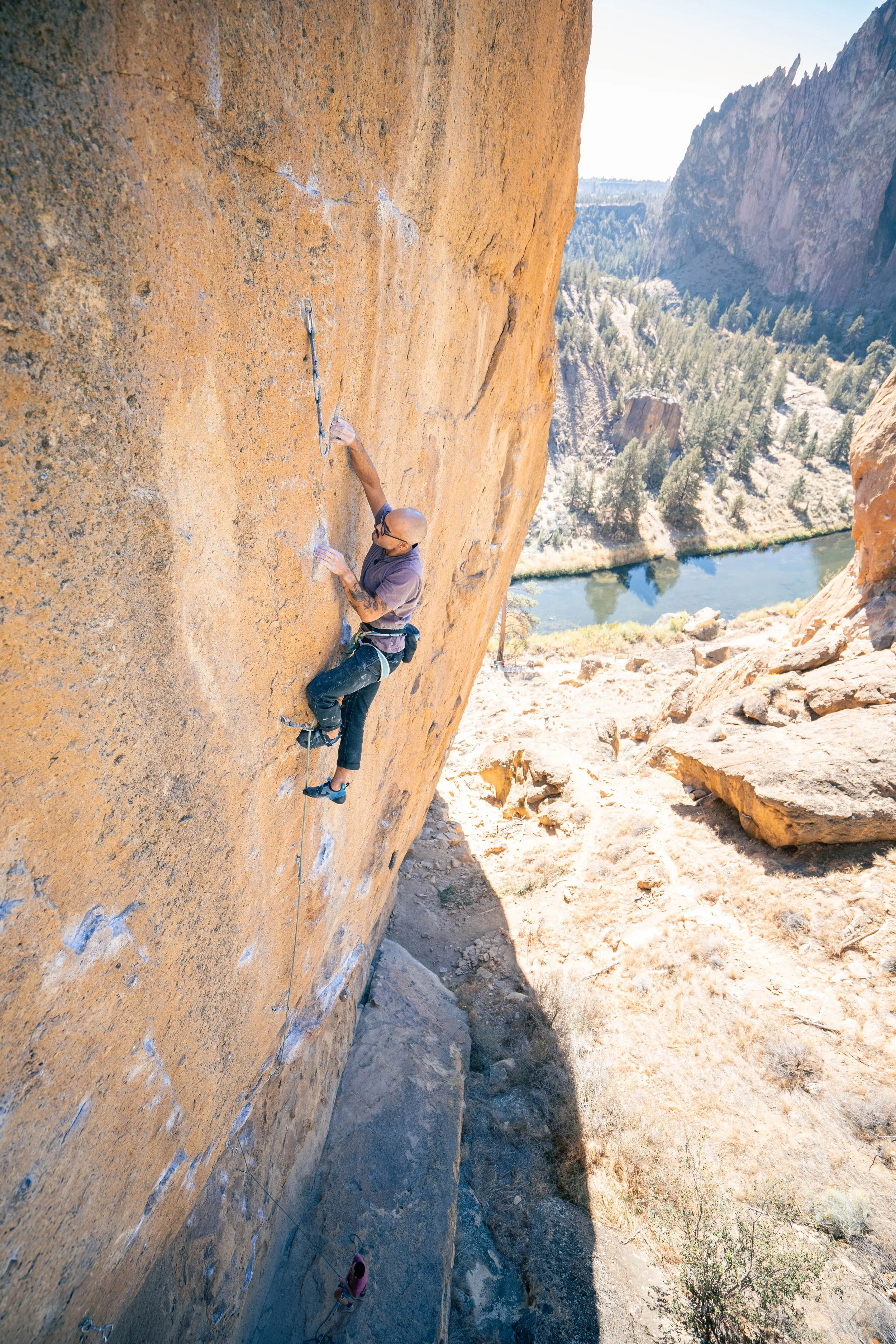
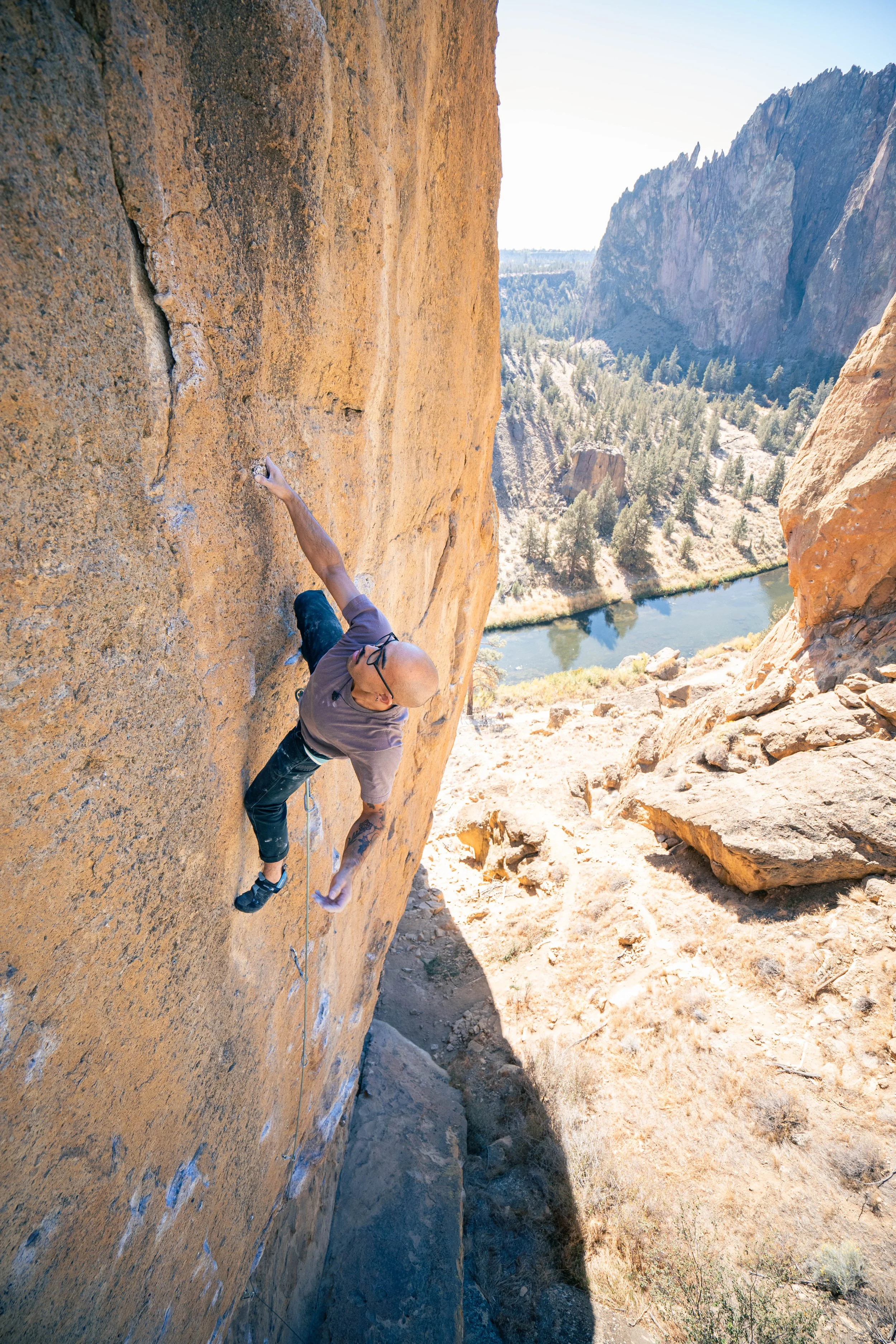
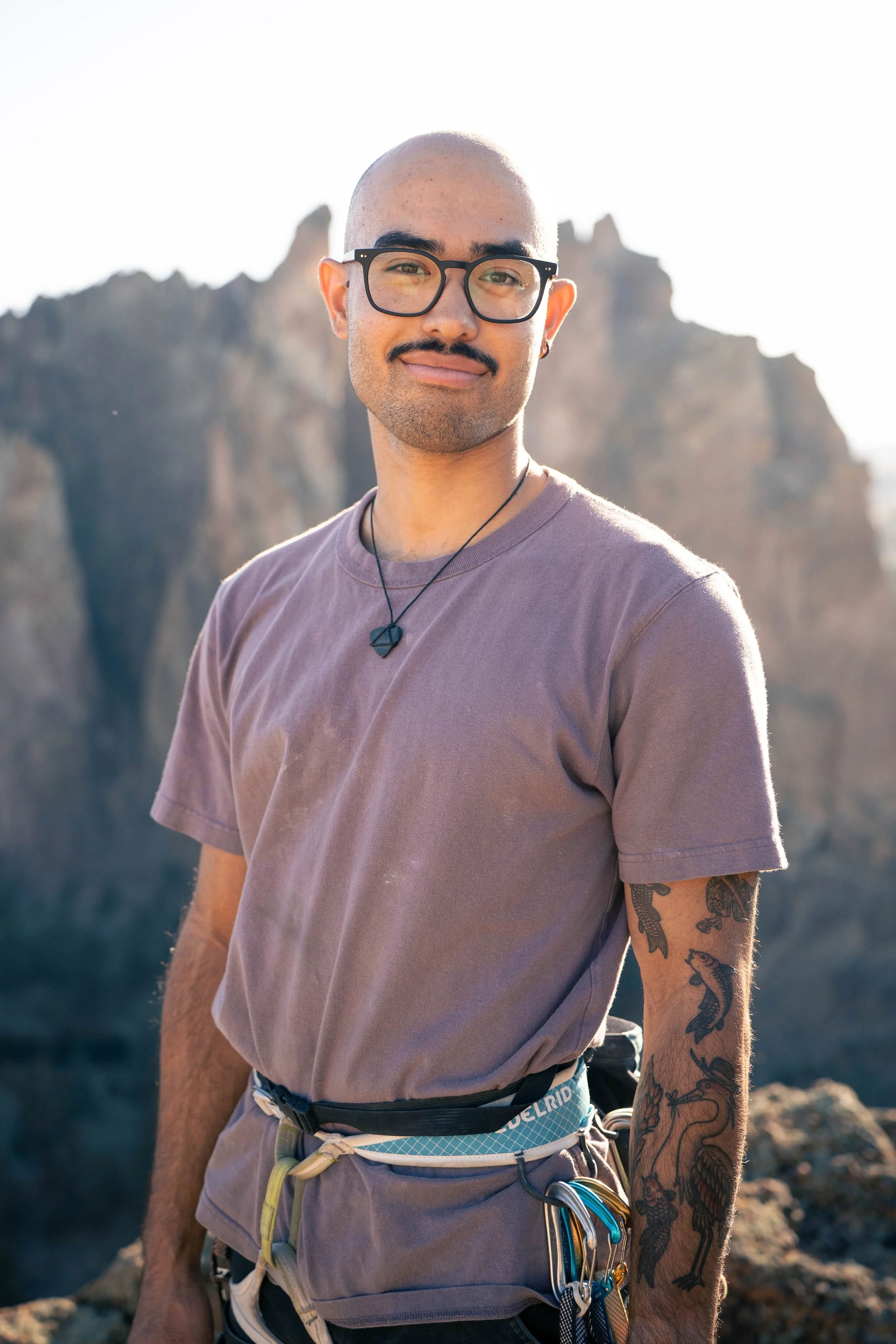
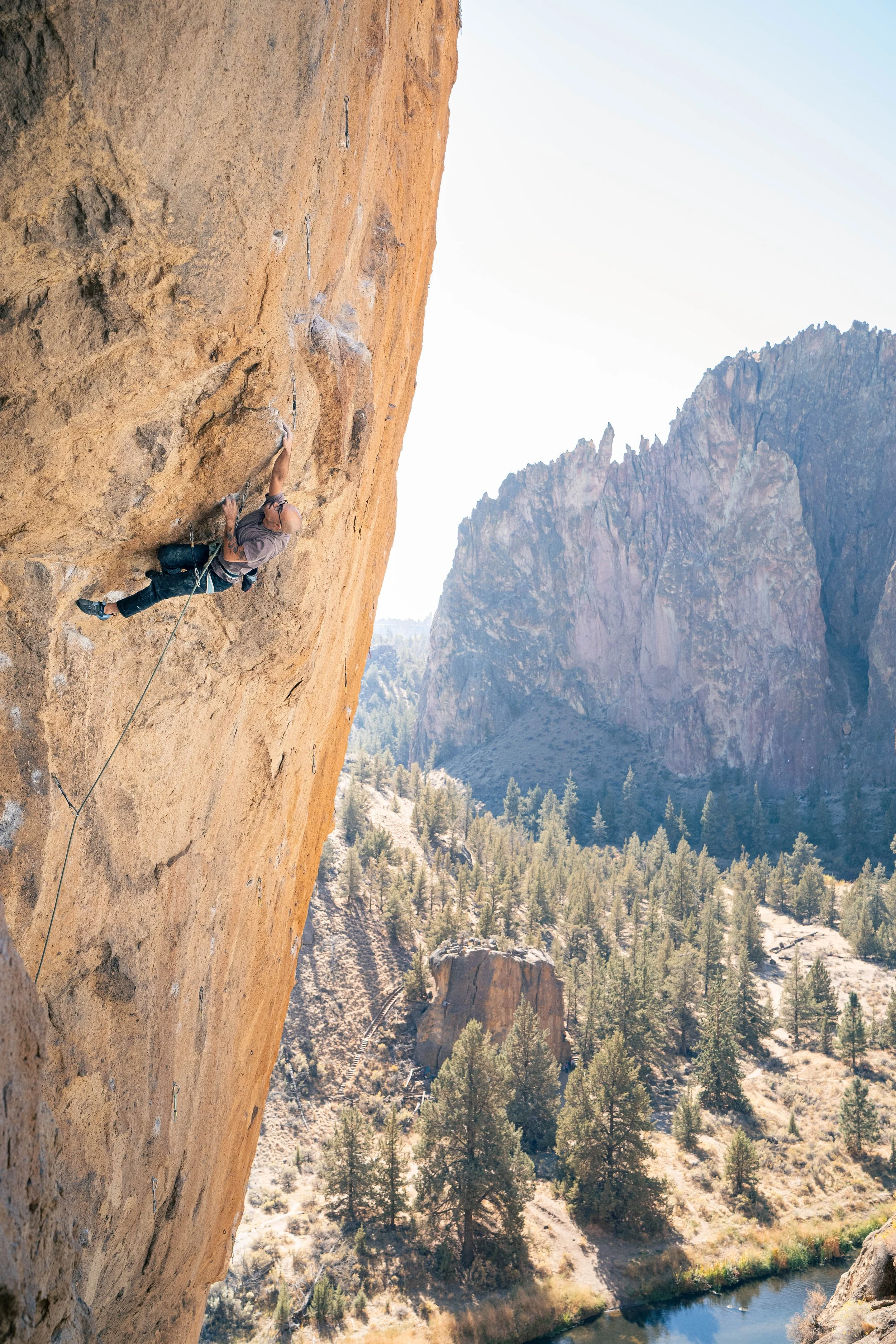
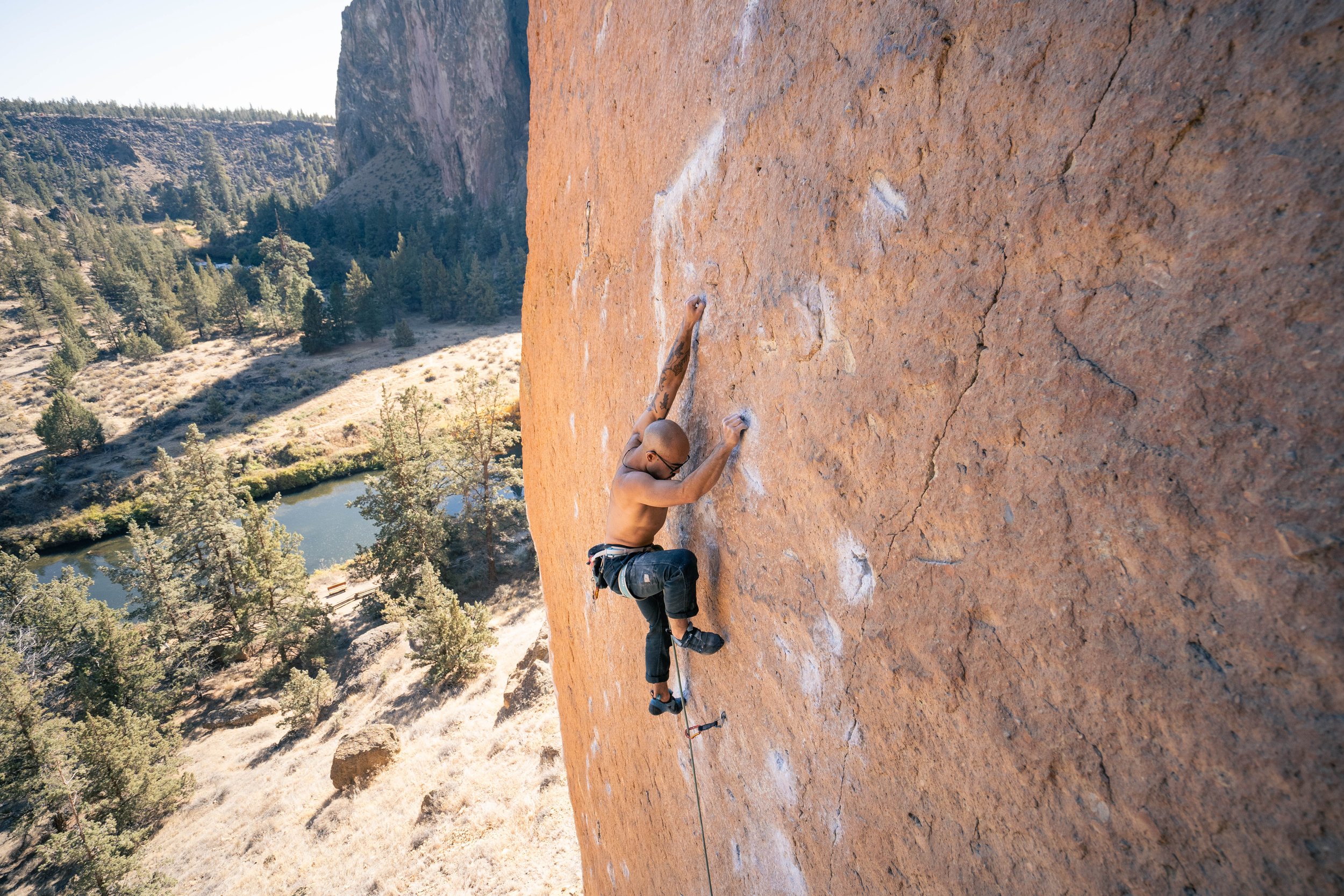
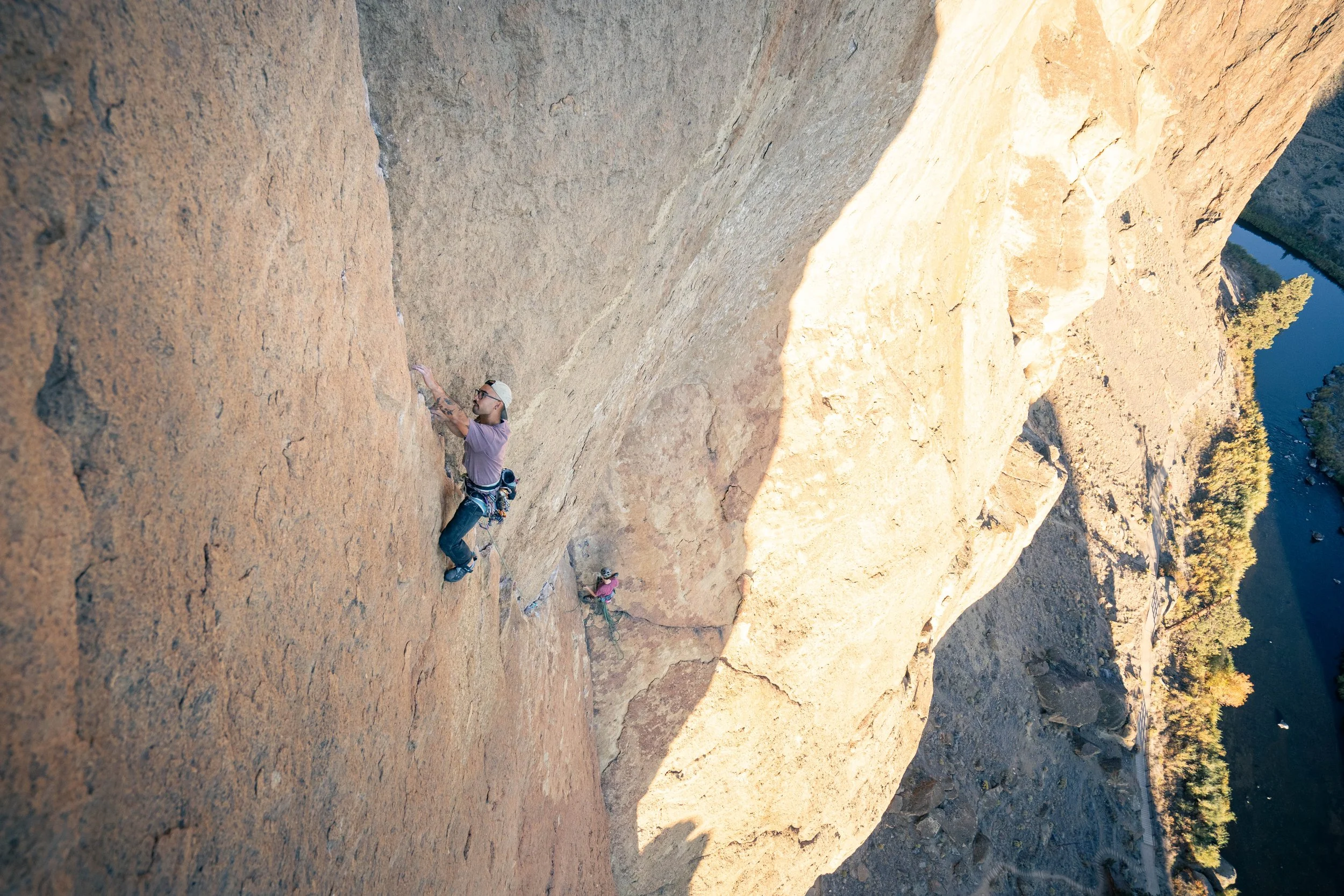
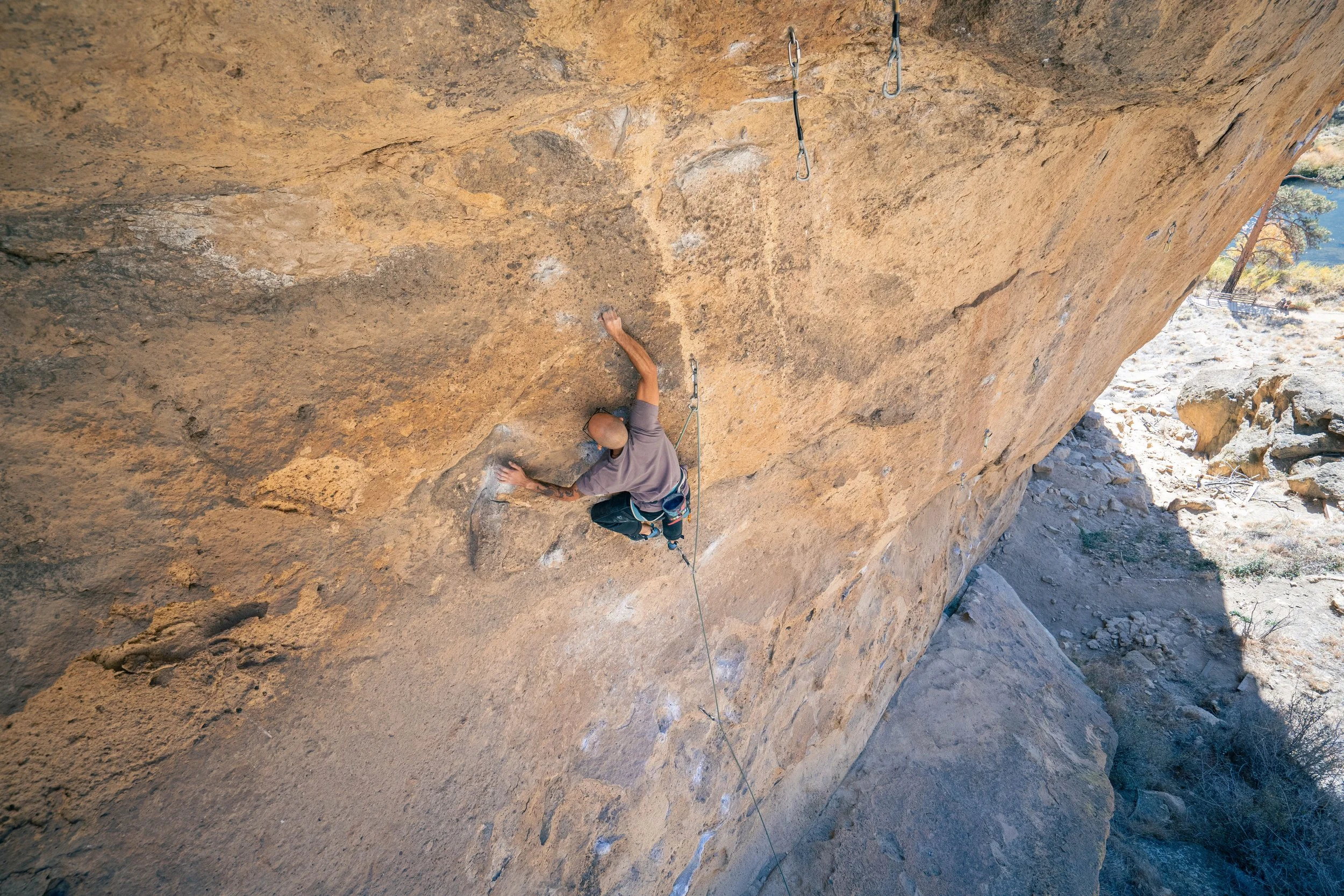
Primary Outdoor Sport: Rock Climbing
Favorite Beverage: Bubbly Water
Sunrise or Sunset: Sunset
Non-Outdoor Hobby: Chess
Go-To Crag Snack: Tuna Packets
Favorite Season: Spring
Guilty Pleasure: Your Mom Jokes
Pre-Crag Music: Dance Music
Book Recommendation: The Three-Body Problem
Three Words to Describe You: Passionate, Frequently Unfocused
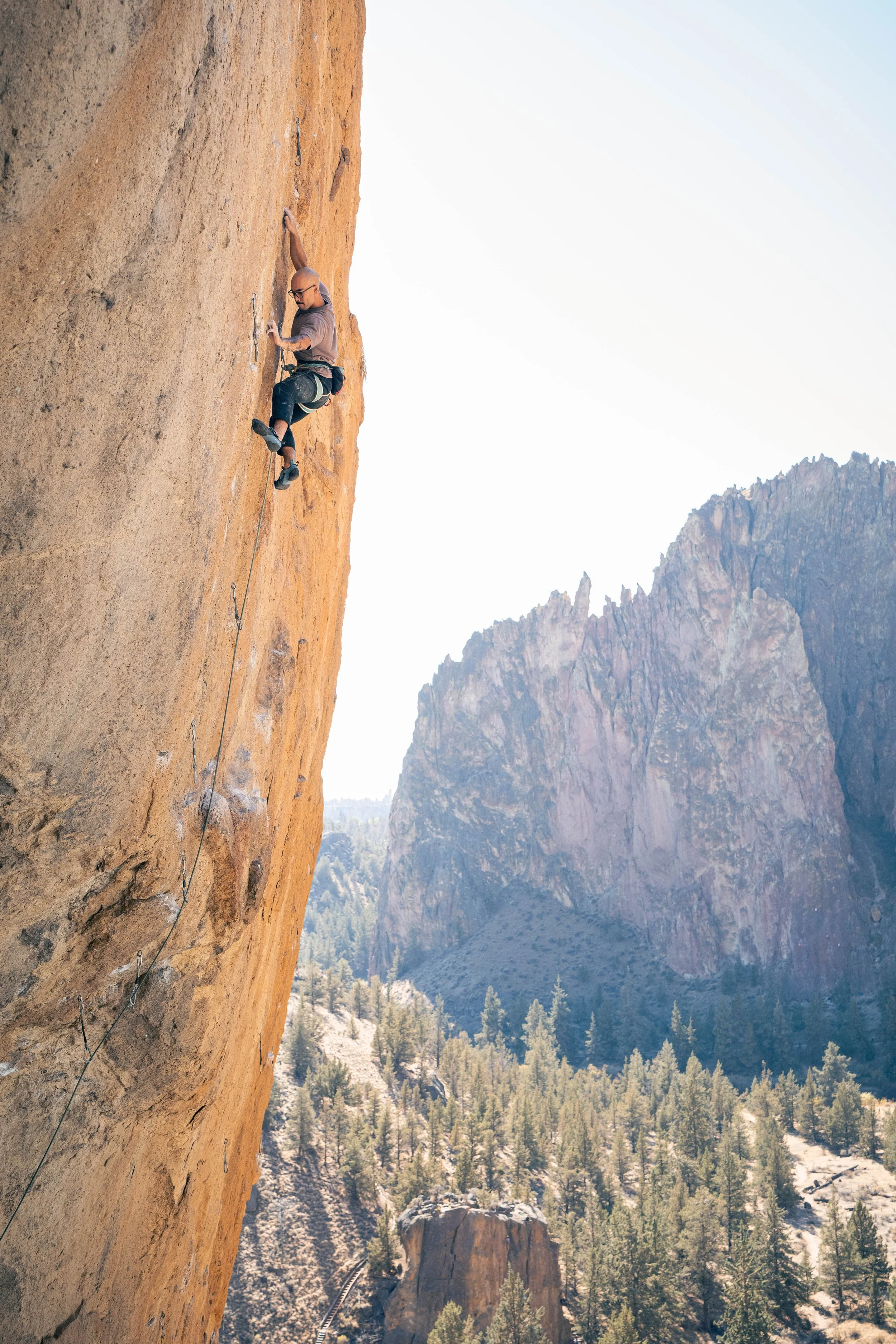
“Ultimately I got into climbing because I was a really serious competitive rower in high school, and I burned out on that and had a bit of an identity crisis. Then my friend started bringing me to the climbing gym, and I got hooked on the movement.
In college, I met a group of people that were excited about climbing outside, and I realized that climbing was this athletic pursuit that I really enjoyed, but it also became this vehicle for me to see the world, to have these intense experiences that I couldn’t have in my day-to-day life, and to connect really deeply with people through these intense experiences.”
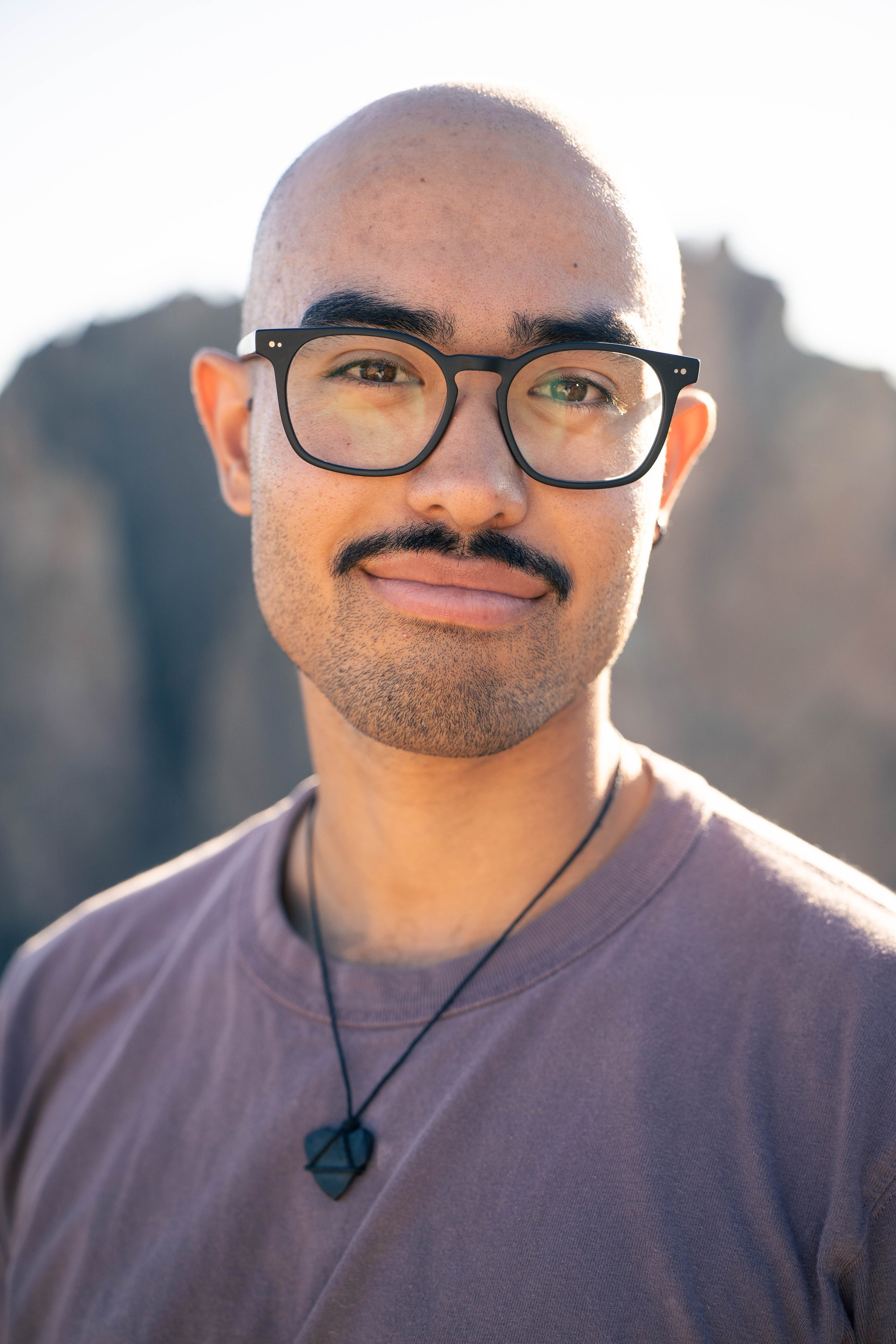
“I pride myself on being something of an all-arounder. I really try to do it all. I boulder occasionally, do a lot of sport climbing, a fair amount of trad climbing, even some ice climbing.
I’m the kind of person that really craves novelty. I’ll get bored if I’m doing the same thing for too long, and I appreciate that by switching up disciplines you’re developing the same core skillset, and you can keep progressing in some shape or form in all these different disciplines. But, every time you switch it up, it’s like a different game.
I can also be a one-track-mind kinda guy, so it’s nice that it is ultimately the same skillset between all these different disciplines, but I can still get my variety.”
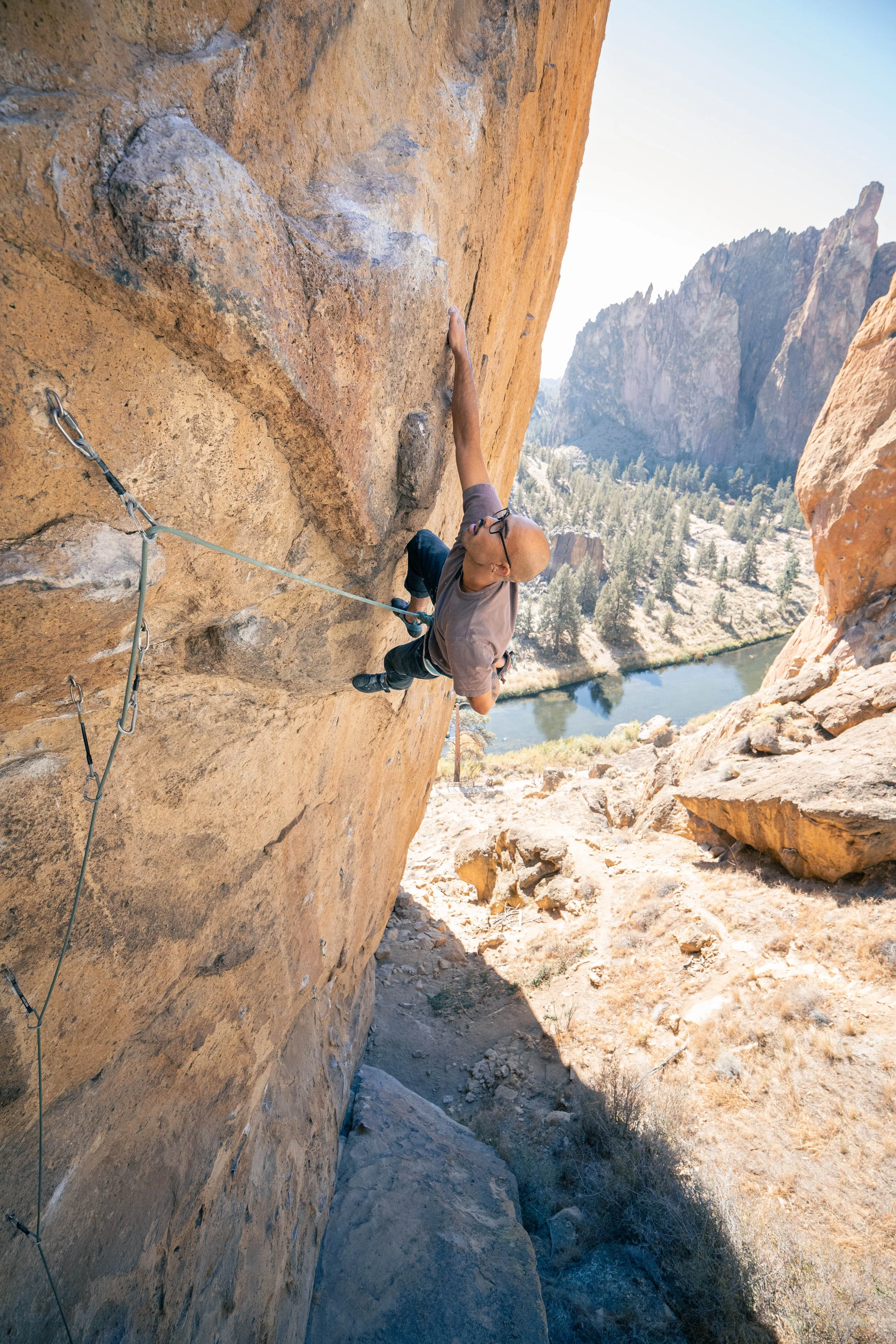
“As somebody that grew up in suburbia, the son of two immigrants that were professionals, I didn’t really take a whole lot of risks. It felt like for most of my life my decisions didn’t really matter. I could bomb every test for all my classes, and I’d still have a roof over my head and food on the table.
But when I first started climbing these more serious routes that are more committing or longer or have more objective hazard, that was when for the first time in my life it felt like my decisions had a really tangible significance to them.
And I don’t describe myself as the kind of person that seeks out risk necessarily. I don’t really think that risk has a ton of inherent value for me. But there was just something about how real and tangible all of these decisions, and my own ability to hold it together. Something about the realness of that really grabbed me and I think it’s done a lot for me. It’s made me a lot more self-sufficient, able to handle stress.”
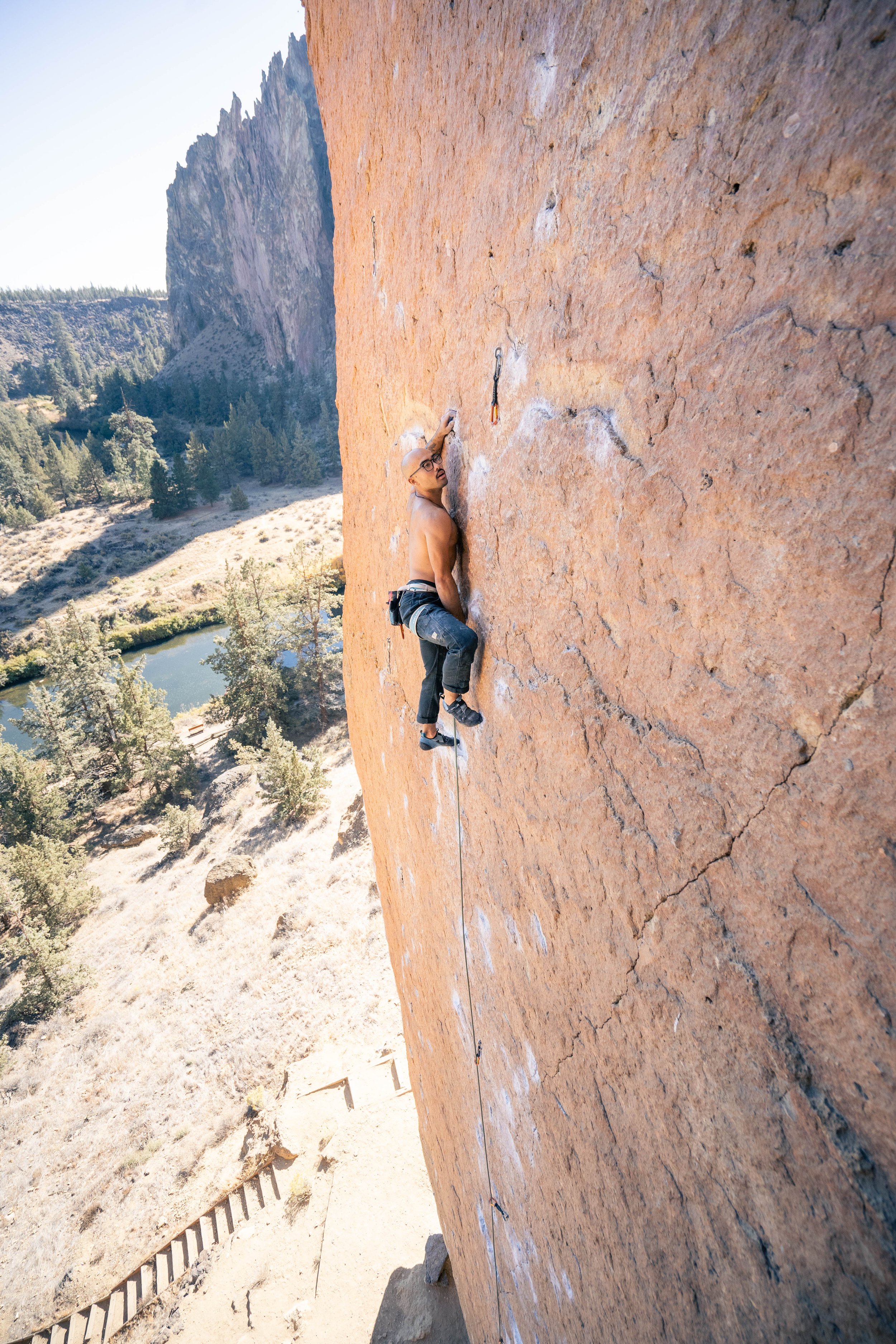
“I think a lot more about risk than I used to. Risk is a very nuanced thing. There’s a lot that goes into it.
It’s this trade-off between likelihood and consequence. Right? And I think a lot of people focus a little bit too much on the consequence, and it leads people to not assess risk accurately.
With climbing, for example, the consequence of catastrophic failure is usually death in a pretty spectacular way. You fall really far away and then you die. But most of the time, I’d say the likelihood of that consequence coming to fruition is actually pretty low, and yet so many people would never climb anything ever because it’s for crazy people.
But then skiing, for example, I think that there’s a lot more moderate to severe consequence involved with that. Spinal cord injuries, TBIs, even joint and ligament injuries that are pretty debilitating. I think that is considerably more likely to happen than a catastrophic failure while climbing.
But people don’t think too much about it because you’re on the ground, and I suppose the consequence doesn’t appear quite as serious as going splat. Maybe it’s not as severe, but it’s still pretty serious. Right? And a lot more likely.”
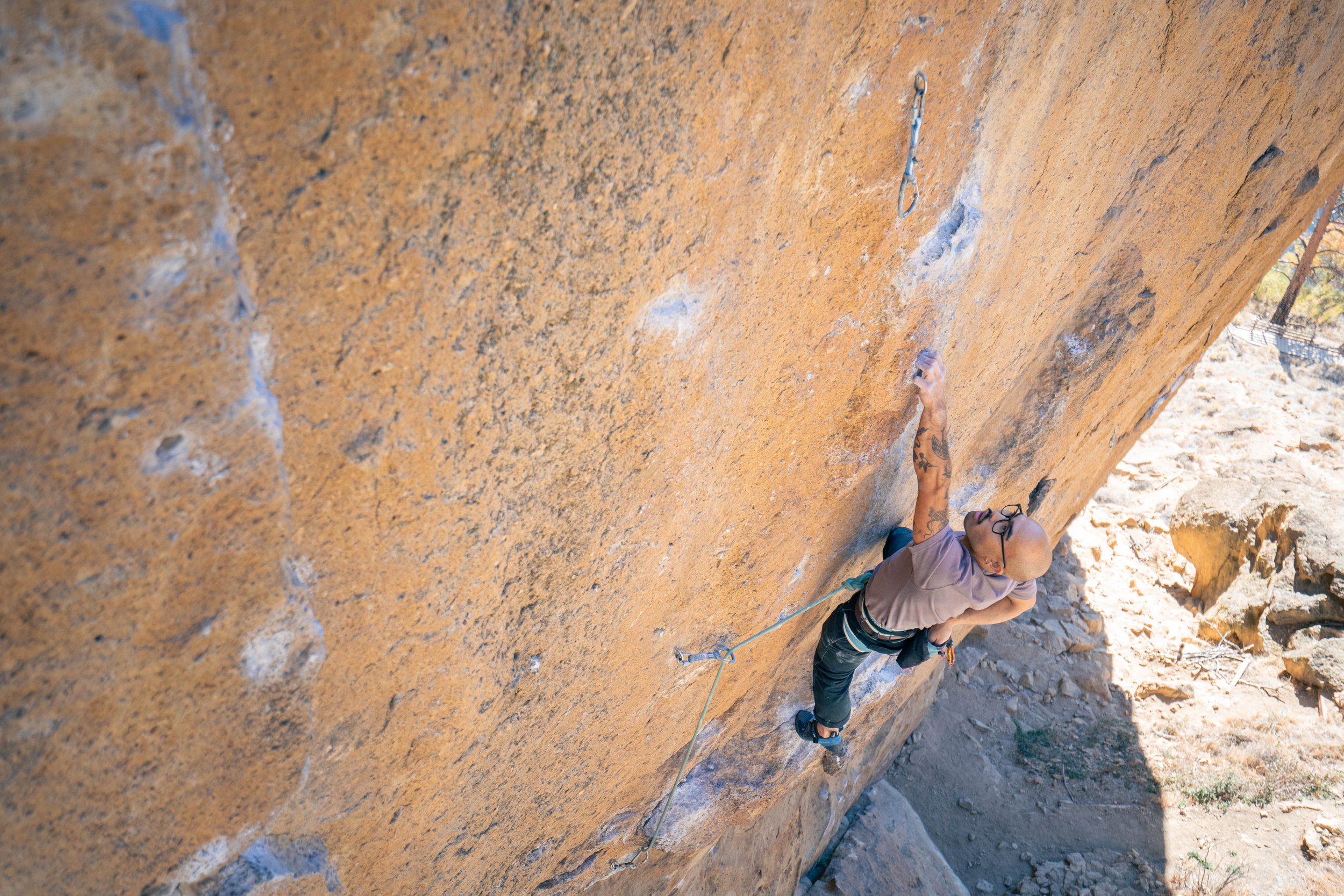
“I’ve learned how to execute when failure isn’t really an option.
If you start trad climbing for long enough, especially in more and more remote and committing positions where there’s less and less of a safety net of search and rescue infrastructure and quick access to healthcare, there will inevitably be situations where failure, falling or an anchor failing, any of these situations where catastrophic failure is a possibility, it’s not an option. Right? Because the consequence is so serious.
In our day-to-day lives, there are often so many safety nets beyond our own competence. And so when you’re put on the spot like that, I think many people, they blink. They haven’t learned the mindset that you need to cultivate where you are fully reliant on yourself to hold it all together.
It’s a mindset that’s not essential to living a happy life, but it’s served me quite a bit in my adulthood, and I have climbing to thank for that.”
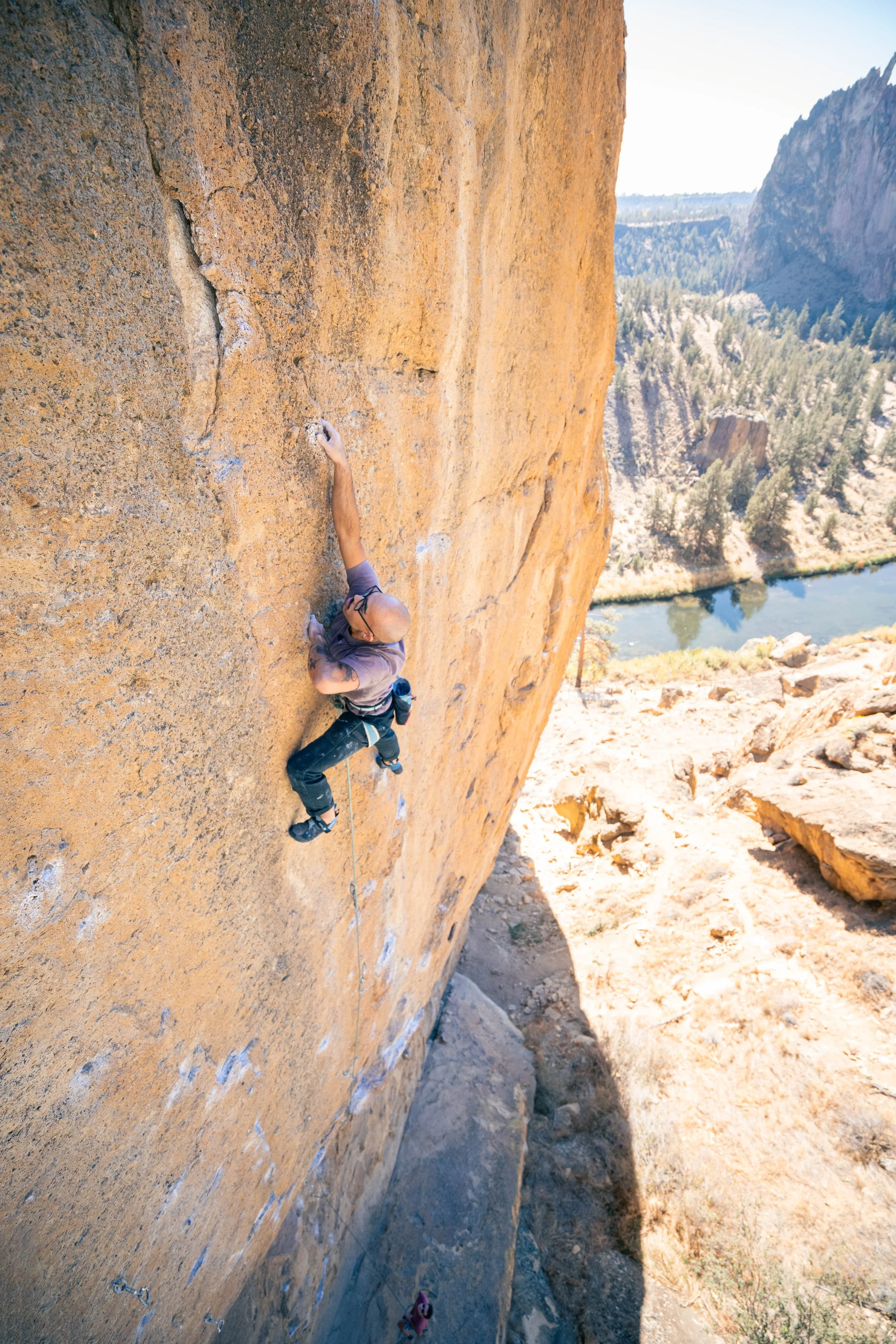
“I went down to this place called Cochamó in Chile. It’s about as far north as you can get in Patagonia and still be in Patagonia.
I went with one of my best friends. We hadn’t climbed a ton together before then, at least not longer, traditional routes, and it ended up being one of the most eye-opening experiences of my life to be in this remote valley, probably the most remote place that I’ve ever been in my life, and be climbing these routes that felt pretty serious, pretty consequential in a number of spots. We ended up doing some pretty big routes of moderate difficulty, and that felt like a big achievement to me, like the culmination of years of practice.
But I think the most valuable part of that trip was just being cut off from the world in a gorgeous place for something like two and a half, three weeks with a close friend of mine. In such an incredible, liminal space.
It didn’t really feel like it was part of the real world as I know it. It was almost like being in an altered state.
It put my mindset in my day-to-day life in context. When you strip away everything that I think of as normal, in our day-to-day lives, there’s a lot of external stimuli and also internal patterns of thought and behavior that we take for granted. And when you strip away a lot of that stuff and just see what your body and mind want to do, I think it can teach you a lot about what you really want, who you really are, and how you should be structuring your life if you want to live the best life you can.”
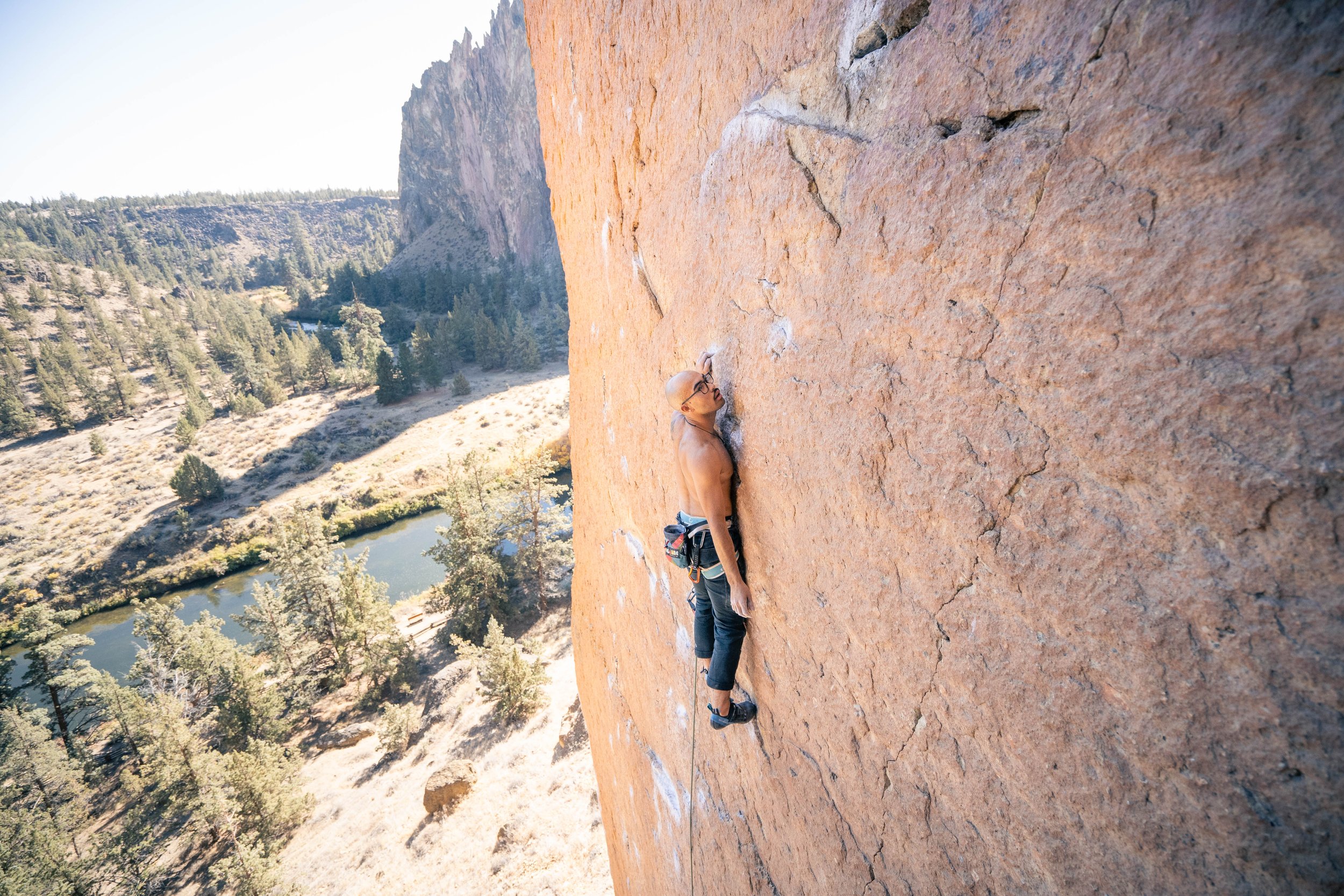
“I’ve struggled with lots of elements of climbing, injuries, fear, managing risk, that sort of thing, but the thing that comes to mind the most for me would be managing my own expectations for myself, and having some grace for myself.
I’m the kind of person that has high expectations for myself, and I can be very unforgiving and harsh when I don’t meet those expectations. Somebody that I respect a lot told me something to the effect of, ‘You can’t really control the outcome of these experiences that we have, but you can control the way that you approach it. You can try your best and try to have a positive experience, try to make it about fun or just being out or connecting with the people that you’re with. And then if the outcome is successful, then ultimately that’s just the cherry on top.’
So that’s been a big struggle for me. I’ve often been very hard on myself. It’s still an ongoing struggle for me. But I try to really not focus on the outcome and just appreciate being out for the day with people that I like.
Especially in a game like climbing, if you’re playing the game to win, you’re trying to meet these benchmarks of mastery of these routes, like a redpoint or an onsight or whatever, it’s a really brutal game. You could execute perfectly for 99% of this route, and then if you make a mistake and fall at any point, doesn’t really matter how much you succeeded, you lost the game. Right?
A game of that brutal nature, I think you really do have to find a way to let go of the outcome, because the margin is so thin, and it’s just inevitable that if you’re trying things at your limit, you’re gonna fail a lot.
I don’t necessarily think that playing the game to win means that you can’t have fun with it. ’Cause I think a lot of the enjoyment that I get out of climbing is actually playing the game to win. It’s the way that it demands so much of me, both in the moment and in all of the cumulative experiences I’ve had that lead up to today. That adds something for me beyond just the cherry on top of success. The trick is remembering that at the end of the day it is just a game. And the point of the game, ultimately, however you play it, is to have fun.
Looking back on these routes that I’ve redpointed or onsighted that are at the limit of my ability, obviously it feels great to send, and it is validating in some ways. But it’s not really the success itself that I take away and carry with me in the long term. It’s more what the pursuit of this success turns the process into. I enjoy that process, and that’s what sticks with me.”
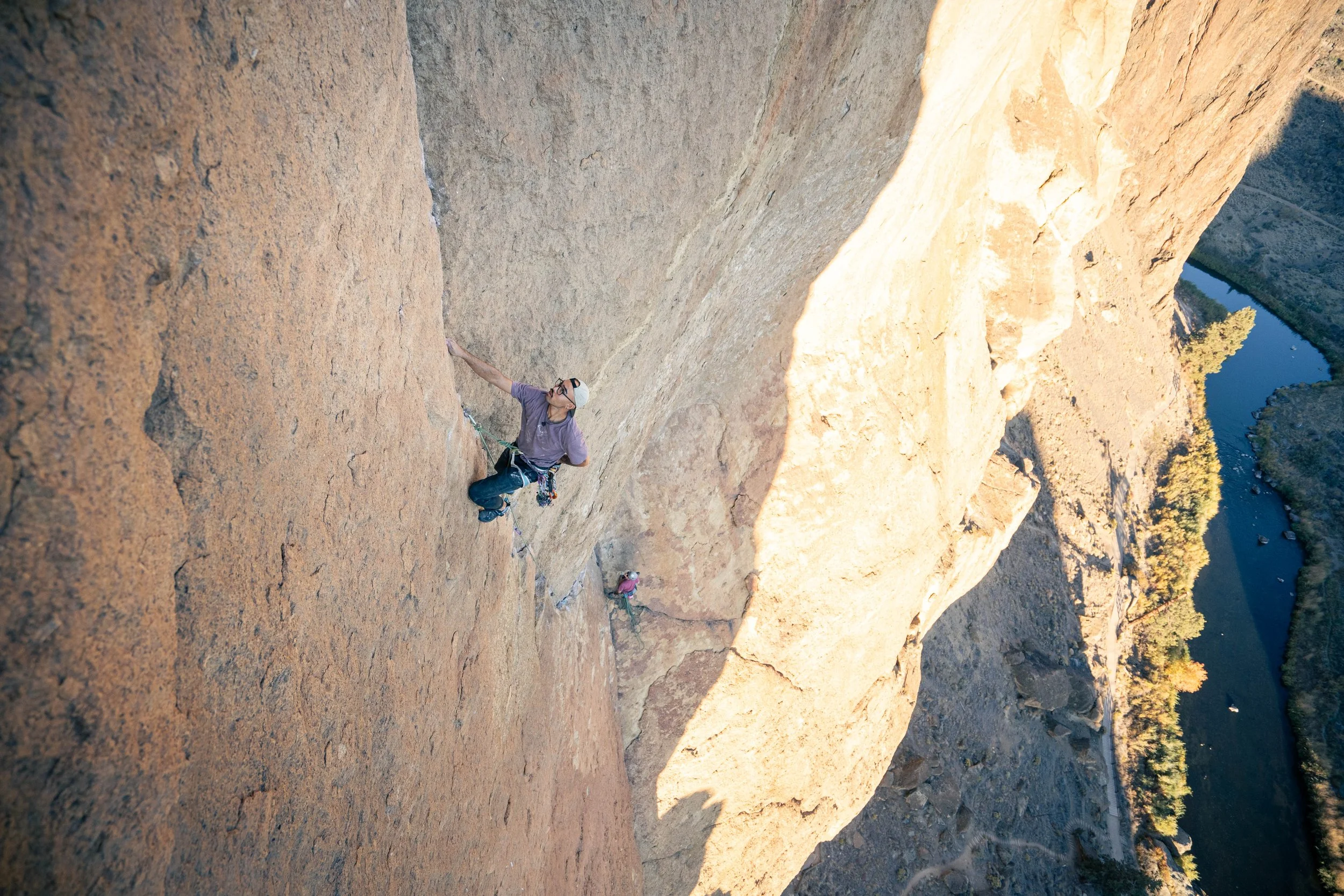
“The bottom line with that is that it’s just nice to be outside. I think I’m a happier, healthier person if I’m spending a good chunk of time outside. I’m also easily bored, so I think if I was just hiking, I probably wouldn’t do it very much. I need to have a game of some kind, something that’s a bit more engaging.
Even just a place like Smith, if you were just hiking, you could probably hike every trail in the park in a week, and then you’ve done it. You’ve completed Smith Rock. But if you’re here to climb, there’s lifetimes of climbing here that you’ll never complete.
So it makes all of these different places around the world both astronomically bigger, but also uniquely appealing. There’s these spots that I can think of all over the world, many of which I haven’t visited, but I have a reason to go there, potentially. I have something I could go do, that I want to do in these places.
It gives you more to do. It makes these places feel bigger. And I think you also connect with these places a lot more intimately as well, because you look at them under a microscope, in a manner of speaking.”
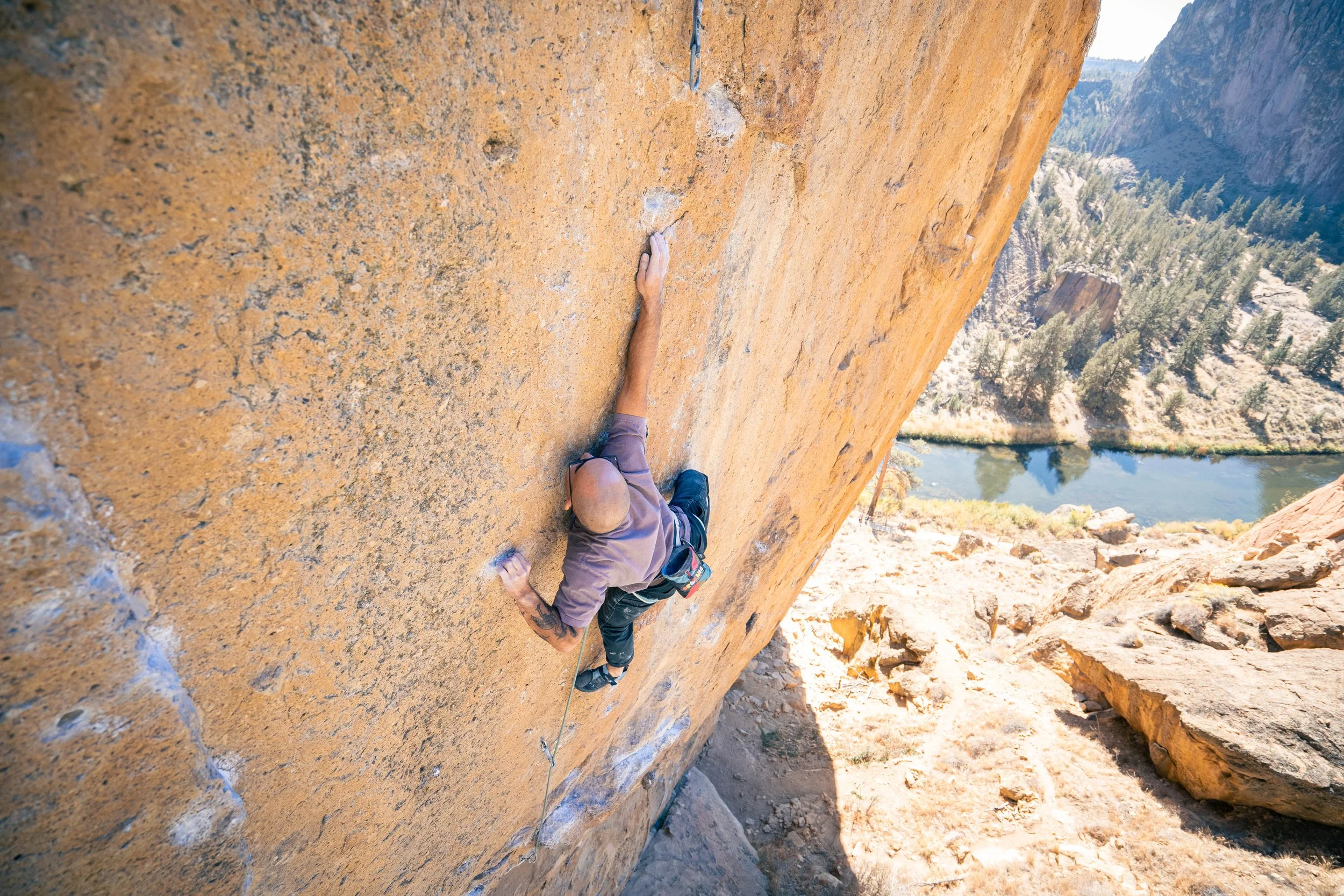
“Climbing has given me really damn near everything that I value in my adulthood.
Pretty much all of the most important relationships in my life I’ve found one way or another through climbing. And I do have a tendency to be somewhat of a reclusive person. So I wonder how many connections I really would have made in my life if it wasn’t for this sport that most of the time requires at least one partner.
The people that I have met climbing are in many ways representative of the general population. Lots of people climb for many different reasons. But I suppose one common thread would be a sense of passion. Most of us aren’t getting paid for going out and doing these things, and it takes time and effort.
I tend to gravitate towards people that express themselves authentically and I think that strongly correlates with passion. So I suppose I’m surrounded by generally pretty authentic people.”